
La Roque Gageac
History, beauty and legends on the Dordogne
Nestled between dramatic cliffs and the Dordogne River, La Roque-Gageac is one of the most photographed villages in France. Ranked among Les Plus Beaux Villages de France, it combines a remarkable natural setting with centuries of history — from Viking raids to the Hundred Years’ War.
A Village Between Rock and River
The name “La Roque” comes from the limestone cliffs towering above the village, while “Gageac” refers to its early medieval roots. Built directly into the cliff face, the houses and fortifications of La Roque-Gageac seem to grow from the rock itself. This natural protection gave the settlement a unique defensive advantage throughout history.
Defending Against the Vikings
In the 9th and 10th centuries, Viking incursions threatened riverine towns across France. La Roque-Gageac, with its high cliffs and troglodyte fortresses cut directly into the rock, became a safe haven. The village built fortified shelters above ground level, where people could retreat with supplies and withstand attacks. These cliff dwellings still stand today, silent witnesses to a turbulent era.
The Hundred Years’ War
During the Hundred Years’ War (1337–1453), the Dordogne Valley lay on the frontier between English and French territories. La Roque-Gageac became an important strategic stronghold, guarded by a castle and defensive walls. Its commanding position over the river made it a coveted site — both for controlling trade and for monitoring troop movements. Despite sieges and shifting allegiances, the village endured, leaving behind layers of medieval stonework and fortifications that can still be traced.
Architectural Treasures
-
Troglodyte fortresses: Carved directly into the cliffs, these ancient fortifications offered refuge in times of danger.
-
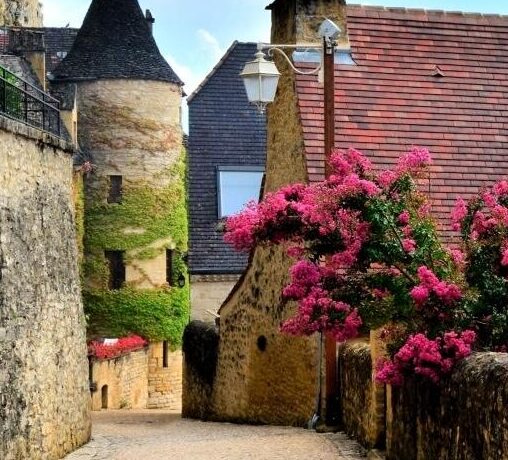
Medieval houses: Golden limestone walls, lauze stone roofs, and narrow lanes recall the village’s prosperous medieval past.
-
Renaissance manors: Several noble residences reflect the wealth of La Roque-Gageac in the 15th and 16th centuries.
-
The Church of La Roque-Gageac: Overlooking the village, it stands surrounded by lush Mediterranean plants thanks to the area’s unique microclimate.
A Unique Microclimate
Sheltered by cliffs and facing south, La Roque-Gageac enjoys a remarkably mild climate. Palm trees, fig trees, banana plants, and even bamboo thrive here, lending an exotic touch rarely seen in southwestern France. A small botanical garden along the village streets showcases this Mediterranean influence.
Life Along the Dordogne
Historically, the Dordogne River brought wealth and movement. Flat-bottomed boats called gabares carried salt, wine, and other goods, making La Roque-Gageac an active port. Today, visitors can still enjoy gabare cruises to experience the river as medieval traders once did — with the cliffs and castles of the valley rising dramatically on either side.
Why Visit La Roque-Gageac?
-
To wander through one of France’s most beautiful villages.
-
To explore Viking-era fortresses and Hundred Years’ War fortifications.
-
To enjoy the botanical garden and mild climate.
-
To cruise the Dordogne by gabare and admire panoramic views of castles and cliffs.
La Roque-Gageac is not just a destination — it is a journey through time, where history, nature, and architecture meet in one unforgettable place.
✨ Travel Tip: Visit in the early morning to see the golden cliffs lit by the sun, or take a sunset gabare cruise for breathtaking views of the Dordogne Valley.